5 Hidden Benefits of Smart Factory Implementation
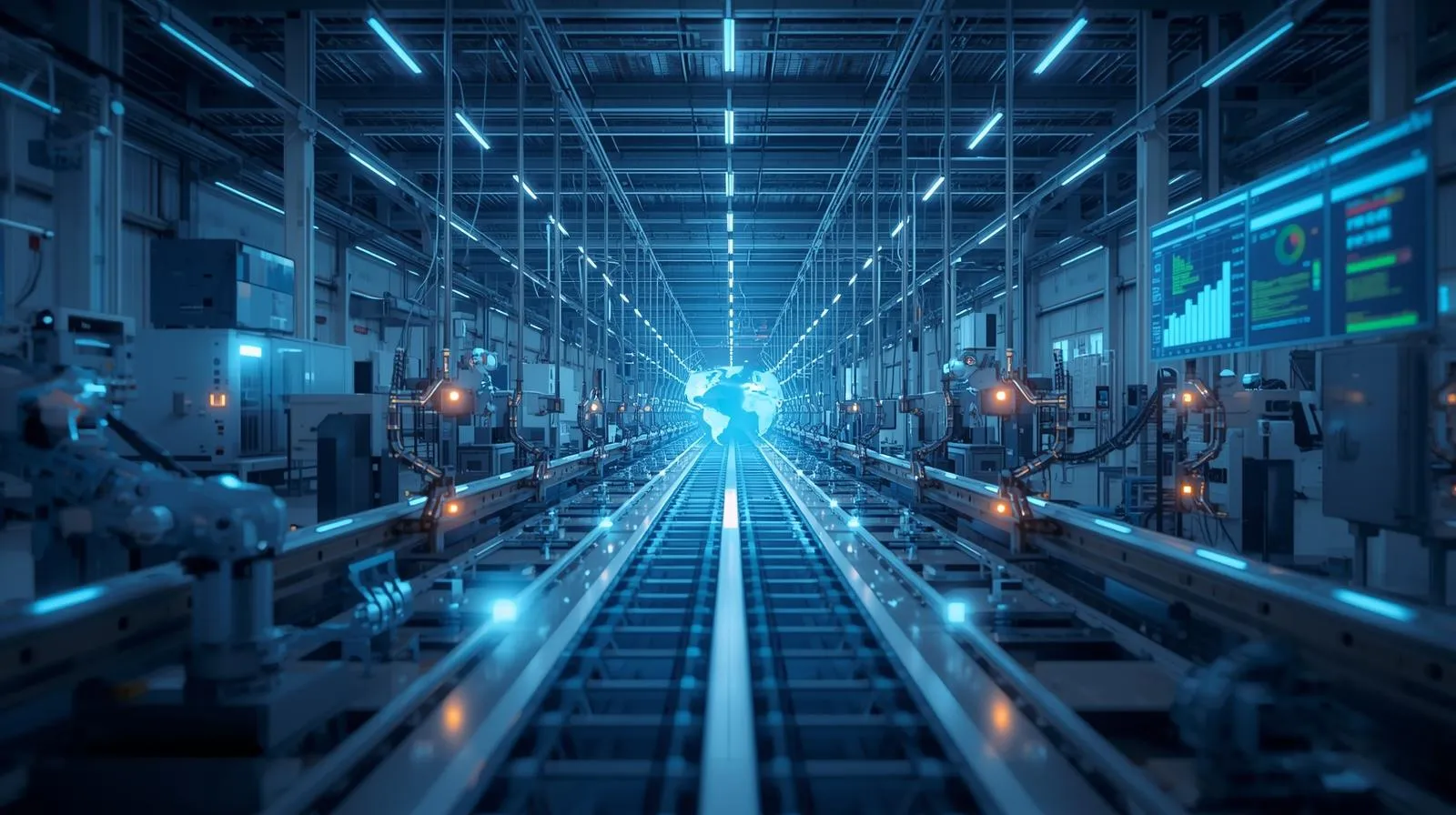
Beyond the well-known advantages of cost reduction and increased efficiency, Smart Factories offer a wealth of hidden benefits that can revolutionize your manufacturing operations. This article delves into five unexpected advantages of Smart Factory implementation, exploring how these intelligent systems can enhance production flexibility, improve product quality, provide data-driven insights, and ultimately drive business growth. Discover how IoT sensors, AI algorithms, and real-time data analytics work together to create a more responsive, resilient, and profitable manufacturing environment. Learn practical strategies for getting started and future-proof your business with smart factory technologies.
The Industrial Revolution with Smart Factory
In an era of rapid technological advancement, the Smart Factory has become one of the most significant trends transforming the global manufacturing landscape. By integrating intelligent technologies into production processes, factories can operate more efficiently, reduce waste, and significantly increase profitability.
But did you know that Smart Factory offers more benefits than you might think? Today, we'll dive deep into 5 benefits you may never have known about, and why they're crucial for your business in today's world.
1. Real-Time Production Efficiency Enhancement
The first benefit that many are familiar with, but may not understand its depth, is real-time production efficiency enhancement. Smart Factory utilizes IoT sensors and AI systems to continuously monitor and analyze production processes.
Real-Time Operations
- Machine Status Monitoring - The system can monitor the operational status of every machine in real-time
- Instant Data Analysis - Production process data is analyzed immediately and displayed on dashboards
- Automatic Optimization - The system can automatically adjust production parameters to enhance efficiency
- Immediate Alerts - When problems or anomalies occur, the system notifies supervisors instantly
With these capabilities, factories can increase their Overall Equipment Effectiveness (OEE) by 15-25% and significantly reduce unnecessary machine downtime.
2. Significant Operational Cost Reduction
Many might think Smart Factory requires high investment, but it actually saves costs significantly in the long run. Not only from increased efficiency but also from many factors you may never have considered.
Sources of Cost Savings
- Energy Reduction - AI systems can optimize energy usage by 20-30%
- Waste Reduction - Real-time quality control reduces production waste by 40-50%
- Maintenance Cost Reduction - Predictive Maintenance reduces emergency repair costs by 30-40%
- Labor Cost Reduction - Automation reduces the need for repetitive labor by 25-35%
- Raw Material Stock Reduction - Precise Just-in-Time systems reduce storage costs by 20-30%
Overall, organizations implementing Smart Factory can reduce total operational costs by 20-40% within 2-3 years, which is more than many anticipated.
3. Product Quality Enhancement and Error Reduction
Product quality is paramount in manufacturing. Smart Factory enhances quality in multiple dimensions you may never have considered.
Intelligent Quality Control
Smart Factory systems use multiple technologies together for quality control:
- Computer Vision and AI - Inspect product quality with high-resolution images, detecting tiny defects invisible to human eyes
- Sensor Networks - Various sensors continuously measure critical parameters like temperature, pressure, and humidity
- Statistical Process Control (SPC) - Real-time statistical analysis to detect trends that might lead to defects
- Traceability Systems - Track back through every production step; when issues arise, root causes can be quickly identified
The result is a 40-60% reduction in defect rates and significantly improved product quality delivered to customers, leading to increased customer satisfaction and repeat orders.
4. Enhanced Production Flexibility
In an era where market demands change rapidly, adaptability is key to success. This is a benefit many overlook, but it's critically important.
Flexibility Smart Factory Provides
- Rapid Product Changeover - Can switch from producing Product A to Product B in just 30 minutes instead of several hours
- Mass Customization - Produce customer-customized products without significantly increasing costs
- Production Volume Adjustment - Flexibly increase or decrease production volumes based on market demand
- New Product Testing - Quickly and efficiently test and refine new products
This flexibility enables businesses to respond rapidly to market demands, compete more effectively, and seize new business opportunities before competitors.
5. Creating Deep Insights for Better Decision-Making
The final benefit many overlook is the creation of Data-Driven Insights that aid strategic decision-making.
Leveraging Data
Smart Factory generates enormous amounts of data daily. With Big Data Analytics and Machine Learning, this data becomes valuable assets:
- Demand Forecasting - Analyze market trends and predict demand in advance
- Supply Chain Optimization - Link data with suppliers for better management
- Production Planning - Plan production accurately based on real data, not guesswork
- Product Development - Use production process data to develop better new products
- Comprehensive Performance Measurement - Track all KPIs in real-time for a clear business overview
Real-World Example
An electronics component manufacturer used Smart Factory data to:
- Reduce machine downtime by 70% through Predictive Maintenance
- Increase machine utilization rate from 65% to 85%
- Reduce waste from 8% to 2%
- Increase customer satisfaction from 78% to 94%
Getting Started with Smart Factory
If you're interested in transforming your factory into a Smart Factory, proper planning is essential:
- Assess Current State - Analyze production processes and identify areas for improvement
- Set Clear Goals - Establish measurable objectives aligned with business strategy
- Choose Appropriate Technology - Not necessary to use the most complex technology; choose what's suitable and cost-effective
- Start with Pilot Projects - Test on a small scale before scaling up
- Train Employees - Change succeeds when employees have appropriate knowledge and skills
- Monitor and Improve - Continuously measure results and adjust based on data
The Future of Smart Factory
Technology continues to evolve, and the future of Smart Factory will be even more exciting with emerging technologies like:
- 5G Networks - Higher speed and stability will enable more device connectivity
- Edge Computing - Faster data processing by computing near data sources
- Digital Twin - Create virtual factories for testing and simulation
- Collaborative Robots (Cobots) - Robots that work safely alongside humans
- Blockchain for Supply Chain - Transparency and security in supply chains
FAQ
What is a Smart Factory?
A Smart Factory leverages technologies like IoT, AI, and automation to create a more efficient, flexible, and data-driven manufacturing environment.
How can a Smart Factory reduce costs?
Smart Factories reduce costs through optimized energy usage, waste reduction, predictive maintenance, labor automation, and efficient inventory management.
What are the benefits of implementing a Smart Factory?
The benefits include increased efficiency, reduced costs, improved product quality, enhanced production flexibility, and data-driven insights for better decision-making.
Conclusion
Smart Factory isn't just a temporary trend but a necessary transformation for 21st-century manufacturing. The 5 benefits we've discussed - efficiency enhancement, cost reduction, quality improvement, flexibility, and data-driven insights - are just part of what Smart Factory can deliver.
Getting started may seem challenging, but with proper planning and the right partners, your business can successfully enter the Smart Factory era and reap tremendous long-term benefits.
Are you ready to transform your factory into a Smart Factory? Contact us today!
Share this article
Content Manager
Content Author
Related Articles
 HOT
HOT