IoT in Manufacturing: Real-World Case Studies & Applications
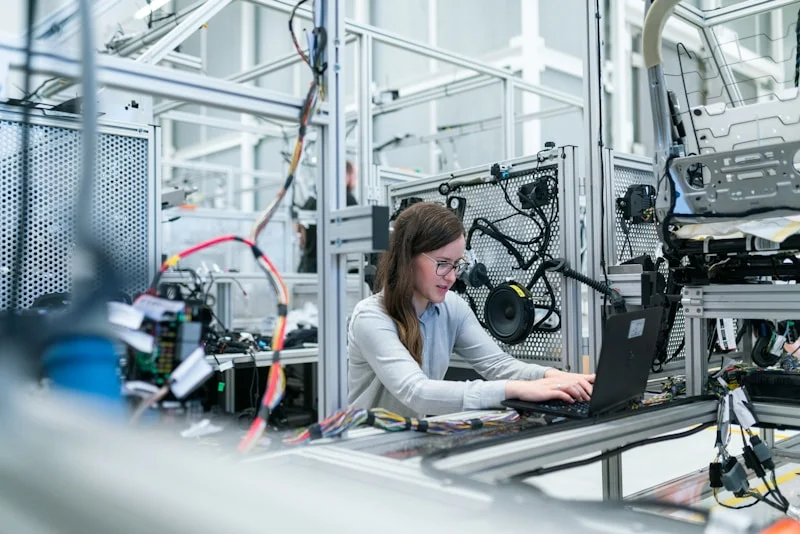
Discover how the Internet of Things (IoT) is transforming manufacturing through real-world case studies. This article examines key applications like predictive maintenance, quality control, and asset tracking, highlighting the tangible benefits of reduced downtime, improved efficiency, and enhanced product quality. We delve into implementation steps and ROI calculation, featuring a case study of a Thai electronics manufacturer's success with IoT adoption. Learn how IoT empowers business transformation in manufacturing, driving both efficiency and profitability, and how you can implement these strategies in your own operations.
IoT in Manufacturing: Real-World Case Studies & Applications
The Internet of Things (IoT) is revolutionizing industries globally, and manufacturing is at the forefront. The Industrial Internet of Things (IIoT) offers unprecedented opportunities to optimize operations, improve efficiency, and drive innovation. This article explores the transformative power of IoT in manufacturing, showcasing real-world applications, a detailed case study, implementation steps, and a comprehensive ROI analysis.
What is Industrial IoT (IIoT)?
The Industrial Internet of Things (IIoT) refers to the network of interconnected devices, machines, sensors, and systems used in industrial settings. These devices communicate and exchange data, enabling real-time monitoring, analysis, and control of manufacturing processes. The core principle of IIoT is to leverage data-driven insights to enhance productivity, reduce costs, and improve overall operational efficiency. Strong data analytics is key to successful IIoT implementation.
Key Applications of IoT in Manufacturing
IoT in manufacturing encompasses a wide array of applications, each designed to address specific challenges and opportunities within the industry. Here are some of the most impactful applications:
- Predictive Maintenance: Using sensors to monitor equipment health and predict potential failures before they occur, minimizing downtime and reducing maintenance costs.
- Quality Control: Implementing sensors and cameras to monitor product quality in real-time, identifying defects early in the production process, and reducing waste.
- Asset Tracking: Tracking the location and status of assets throughout the supply chain, improving inventory management and reducing losses.
- Smart Factory Automation: Automating manufacturing processes through interconnected devices and systems, improving efficiency and reducing labor costs.
- Supply Chain Optimization: Using IoT data to optimize the supply chain, improving delivery times and reducing costs.
Case Study: Thai Electronics Manufacturer Achieves Success with IoT
A Thai electronics manufacturer implemented an IoT solution to improve its production efficiency. The solution involved installing sensors on key equipment to monitor performance and identify potential issues. By analyzing the data collected by the sensors, the manufacturer was able to predict equipment failures before they occurred, reducing downtime by 20%. Furthermore, the manufacturer was able to optimize its production processes, resulting in a 15% increase in overall efficiency. For more information on predictive maintenance, visit our resource page here.
Implementing IoT in Manufacturing: A Step-by-Step Guide
Implementing IoT in manufacturing requires careful planning and execution. Here are the key steps involved:
- Define Your Objectives: Clearly define the goals you want to achieve with IoT, such as reducing downtime, improving quality, or optimizing efficiency.
- Assess Your Infrastructure: Evaluate your existing infrastructure and identify any gaps that need to be addressed.
- Choose the Right Technology: Select the right IoT devices, platforms, and software to meet your specific needs.
- Develop a Data Management Strategy: Establish a plan for collecting, storing, and analyzing the data generated by your IoT devices.
- Implement and Test: Deploy your IoT solution in a phased approach, starting with a pilot project and gradually expanding to other areas of your operation.
- Monitor and Optimize: Continuously monitor the performance of your IoT solution and make adjustments as needed to ensure that it is meeting your objectives.
Calculating the ROI of IoT in Manufacturing
The return on investment (ROI) of IoT in manufacturing can be significant, but it's important to carefully calculate the potential benefits before investing in an IoT solution. The ROI can be calculated using the following formula:
ROI = (Benefits - Costs) / Costs * 100%
The benefits of IoT can include reduced downtime, improved efficiency, enhanced product quality, and lower operating costs. The costs can include the cost of IoT devices, platforms, software, and implementation services.
Challenges of Implementing IoT in Manufacturing
While IoT offers numerous benefits, there are also several challenges associated with its implementation:
- Security: Protecting IoT devices and data from cyberattacks is a critical concern.
- Connectivity: Ensuring reliable connectivity between IoT devices and systems can be challenging, especially in remote or harsh environments.
- Interoperability: Ensuring that different IoT devices and systems can communicate and exchange data seamlessly is essential.
- Data Management: Managing the vast amounts of data generated by IoT devices can be overwhelming.
- Skills Gap: Finding and retaining skilled professionals with the expertise to implement and manage IoT solutions can be difficult.
FAQ About IoT in Manufacturing
What are the main benefits of IoT in manufacturing?
Reduced downtime, improved efficiency, enhanced product quality, and lower operating costs.
What are the key challenges of implementing IoT in manufacturing?
Security, connectivity, interoperability, data management, and skills gap.
How do I calculate the ROI of IoT in manufacturing?
ROI = (Benefits - Costs) / Costs * 100%
Conclusion
IoT is transforming the manufacturing industry, offering unprecedented opportunities to optimize operations, improve efficiency, and drive innovation. By understanding the key applications, implementation steps, and potential benefits of IoT, manufacturers can leverage this technology to achieve significant improvements in their bottom line. Consider exploring our services for IIoT solutions here.
Ready to embrace the future of manufacturing? Contact us today to learn more about how IoT can transform your business.
Share this article
Admin User
Content Author
Related Articles
 HOT
HOT
 HOT
HOT